
Diadromous Fish Research
Telemetry Studies
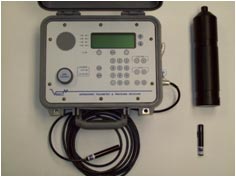
tracking receiver, and transmitter.
Photograph by J. Gibbons - SCDNR
Sonic transmitters are inserted into Atlantic and shortnose sturgeon to monitor migration patterns, seasonal habitats, and spawning locations. This information is used to protect these critical areas and to improve passage to historic spawning sites in hopes that these prehistoric fish populations may one day recover and be removed from the protected or endangered species list.
Telemetry studies on sturgeon have been conducted in the Santee-Cooper basin (Lakes Moultrie and Marion, the Congaree, the Wateree, the Saluda and the Broad Rivers), the Winyah system (Winyah Bay, Waccamaw, Black and Great Pee Dee Rivers), The Cooper River, the Santee River, and the Savannah River.
An array of fixed receivers are deployed throughout these water bodies to constantly monitor the transmitted fish.
So far, shortnose sturgeon spawning sites have been identified by egg collection in the Cooper River, the Congaree River and the Great Pee Dee River.
All sturgeon are weighed, measured, PIT tagged, and have a fin clip taken for genetic analysis before being released.
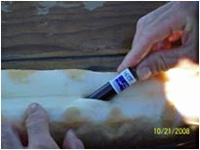
shortnose sturgeon.
Photograph by T. Hughes - SCDNR
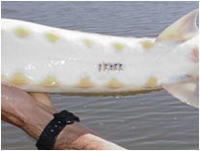
sturgeon.
Photograph by W. Crosby - SCDNR
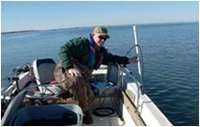
Photograph by W. Crosby - SCDNR
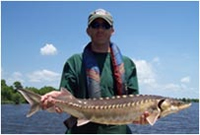
Photograph by W. Crosby - SCDNR
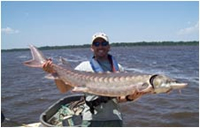
Photograph by T. Hughes - SCDNR