
Habitat Enhancement
 Habitat
enhancement is an important aspect of our aquatic plant management
plan for South Carolina. Something as simple as keeping
vegetation from becoming too thick around wood duck boxes, selective
management of invasive species to allow natives to thrive again, and plantings
of native species are viewed as habitat enhancement. Bald
cypress and buttonbush can be seen growing in several areas of
Lake Murray, Giant cutgrass has been removed in areas of the Santee
Cooper Lakes to provide access to areas closed for years, and
Phragmites and water hyacinth is being treated in coastal South Carolina to provide
better waterfowl and fisheries habitat.
Habitat
enhancement is an important aspect of our aquatic plant management
plan for South Carolina. Something as simple as keeping
vegetation from becoming too thick around wood duck boxes, selective
management of invasive species to allow natives to thrive again, and plantings
of native species are viewed as habitat enhancement. Bald
cypress and buttonbush can be seen growing in several areas of
Lake Murray, Giant cutgrass has been removed in areas of the Santee
Cooper Lakes to provide access to areas closed for years, and
Phragmites and water hyacinth is being treated in coastal South Carolina to provide
better waterfowl and fisheries habitat.
The SCDNR-ANS Program strives to foster a diverse aquatic plant community through selective treatment of nuisance aquatic vegetation (to avoid adverse impacts to existing non-invasive plant species) and the introduction of desirable native plant species.
Waterfowl Enhancement in different areas of the
state:
SCDNR & Santee Cooper
Water hyacinth/Water lettuce
|
Phragmites (since 1994)
Giant Cutgrass (since 1991) |
Lake Murray Habitat Enhancement Project
We continue to participate with our Freshwater Fisheries Section providing manpower
to distribute Christmas trees for the fish attractor sites. We are
also open to partnerships with SCE&G and other private groups to coordinate
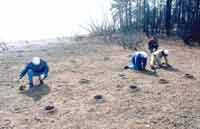
and plant more areas in the future. In the past the S.C. Department of Natural
Resources and South Carolina Electric and Gas, along with local
groups, have joined forces to establish native aquatic plants on
designated shores of Lake Murray as part of a joint effort to reduce
shoreline erosion and improve fish and waterfowl habitat. This is an important part of our
overall aquatic plant management effort on the lake. Some
aquatic vegetation is good for the lake because it protects the
shoreline from erosion and provides good fish and waterfowl habitat.
Unfortunately, most people only hear about problematic invasive plants
such as hydrilla.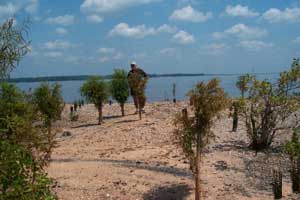
Plantings to date:
-
Bald Cypress - 7,100
-
Button Bush - 7,300
-
Pondweed - 1,000 tubers
-
Vallisneria - 4,000 tubers
- River Birch - 300