Audubon Shorebird Stewards help take shifts patrolling popular South Carolina beaches, educating beachgoers about shorebird life history needs and how to avoid negatively impacting them.
Cape Romain Bird Stewards protect and monitor shorebirds and seabirds in the Cape Romain Region on weekends and holidays from May until August. Volunteers boat over to barrier island nesting colonies to help prevent detrimental disturbances to nesting birds by educating the public. The SCDNR contact for this program is shorebirds@dnr.sc.gov.
Lack of suitable beach nesting areas and loss of nests to washover and predation possibly led the Least Tern
in South Carolina to adapt to nesting on flat, pebble-covered roofs in the 1980s. If you know of a roof which
has nesting Least Terns, please contact shorebirds@dnr.sc.gov.
Volunteers may be able to assist the Wading Bird Program (nest monitoring, colony surveying, data entry and/or database design). SCDNR is
asking the public to report sightings of banded and tagged wading birds to wadingbirds@dnr.sc.gov
and also to the Bird Banding Lab or 1-800-327-BAND.
If you see wood storks, you can check to see if they have bands by looking at their upper legs.
Tagged great egrets are also occasionally observed in South Carolina and can be reported to SCDNR and the Bird Banding Lab.
Hawks – Participate in a hawkwatch count from September to November at various hawkwatch sites in South Carolina to help count and record migrating raptors. This data is collated by the Hawk Migration Association of North America (HMANA) in the semi-annual journal Hawk Migration Studies, which includes seasonal reports on the migration and more. This research is a driving force behind the Raptor Population Index (RPI), to promote scientific analysis of hawk count data.
To participate in the Botany Bay WMA Hawkwatch Volunteer program in Edisto Island, email Brianna Evans.
Nightjar – Help the Center for Conservation Biology survey for nightjar species (whip-poor-will, chuck-will's-widow, and nighthawk) as part of the Nightjar Network.
Osprey – Help the Center for Conservation Biology collect data on Osprey by joining Osprey Watch.
If you see a Swallow-tailed Kite, you can help us determine their distribution, monitor population trends, and locate important nesting and foraging sites by reporting it through the Center for Birds of Prey.
Injured Bird Transport Volunteer – Volunteer through the Center for Birds of Prey to help transport injured birds. Volunteers work within their own geographic area and, after receiving instruction in the principals and techniques essential to the safe capture and transport of injured birds of prey and some shorebirds, they are responsible for bringing injured birds to the Avian Medical Clinic from throughout the state. Training and authorization are required.
Report Sick or Unusual Bird Deaths – In an effort to keep a watch out for highly pathogenic avian influenza (HPAI) in the United States,
please report birds to the USDA (1-866-536-7593), your local veterinarian, or SCDNR. For more information, visit the
USDA website.
Bobwhite quail – Summer brood surveys are conducted through SCDNR.
Read about the species and contact the small game biologist to be placed on the mailing list. Hunter surveys are also taken on this species.
Chimney swift – Assist Driftwood Wildlife Center track the first spring arrivals
(through eBird) and create nesting towers for this migratory species.
Hawks – Hawkwatch International provides opportunities to contribute data
on migrating hawk species.
Every year from the beginning of September to the end of November, the Center for Birds of Prey is host to the South Carolina
Coastal Raptor Migration Study or "Hawk Watch" where each day volunteers are stationed on an observation platform from which
they count all migrating raptors. This data is collated by the Hawk Migration Association of North America (HMANA) in the
semi-annual journal Hawk Migration Studies, which includes seasonal reports on the migration and more. This research is a
driving force behind the Raptor Population Index (RPI), to promote scientific analysis of hawk count data.
To participate in Sassafras Mountain Hawk watch in the fall, contact coordinator Ed Moorer at moorer03@bellsouth.net.
Rusty blackbird – Assist the International Rusty Blackbird Working Group track the migration of this species as it travels north in
spring through the Rusty Black Bird Blitz. Are there any hotspots on the landscape that attract them? What is the population estimate?
Results are uploaded to eBird.
Wild turkey – SCDNR is conducting a multifaceted research project on wild turkey movement ecology and habitat utilization. During our study, turkeys
will be subjected to hunting during the normal spring season on Webb, Palachucola and Hamilton Ridge WMAs (April 1 to May 1). During
each day of hunting, as many hunters as possible will be given a GPS Tracker unit which will collect the hunter's movement data as they
interact with the individual turkeys during the monitoring period. Using these data, along with data from monitored turkeys we will
evaluate turkey movements, response to hunters, and hunter success. This specific part of the research project will benefit from valued
added information as additional research studies on wild turkeys focusing on hunter response are ongoing in Texas and Louisiana. Interested
participants should contact Jay Cantrell at 803-625-3569.

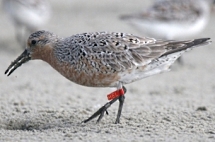 Reporting Banded Birds
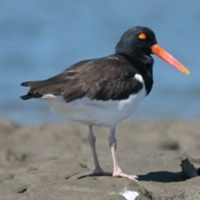 American oystercatcher – Report sightings of banded birds to the American Oystercatcher Working Group.
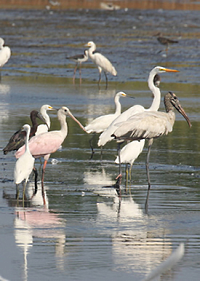 Volunteers may be able to assist the Wading Bird Program (nest monitoring, colony surveying, data entry and/or database design). SCDNR is
asking the public to report sightings of banded and tagged wading birds to wadingbirds@dnr.sc.gov
and also to the Bird Banding Lab or 1-800-327-BAND.
Volunteers may be able to assist the Wading Bird Program (nest monitoring, colony surveying, data entry and/or database design). SCDNR is
asking the public to report sightings of banded and tagged wading birds to wadingbirds@dnr.sc.gov
and also to the Bird Banding Lab or 1-800-327-BAND.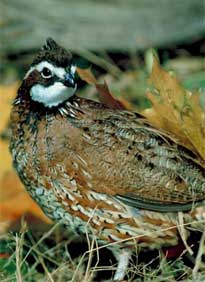 Bobwhite quail – Summer brood surveys are conducted through SCDNR.
Read about the species and contact the small game biologist to be placed on the mailing list. Hunter surveys are also taken on this species.
Bobwhite quail – Summer brood surveys are conducted through SCDNR.
Read about the species and contact the small game biologist to be placed on the mailing list. Hunter surveys are also taken on this species.
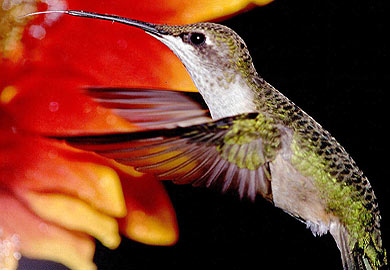 Ruby-throated hummingbird: Make observations about Ruby-throated Hummingbirds. Operation
Ruby Throat is an outreach initiative of Hilton Pond Center for Piedmont Natural History in York, South Carolina. Other hummingbird
sightings can be reported and tracked through the National Audubon Society's Hummingbirds at Home app.
Ruby-throated hummingbird: Make observations about Ruby-throated Hummingbirds. Operation
Ruby Throat is an outreach initiative of Hilton Pond Center for Piedmont Natural History in York, South Carolina. Other hummingbird
sightings can be reported and tracked through the National Audubon Society's Hummingbirds at Home app.